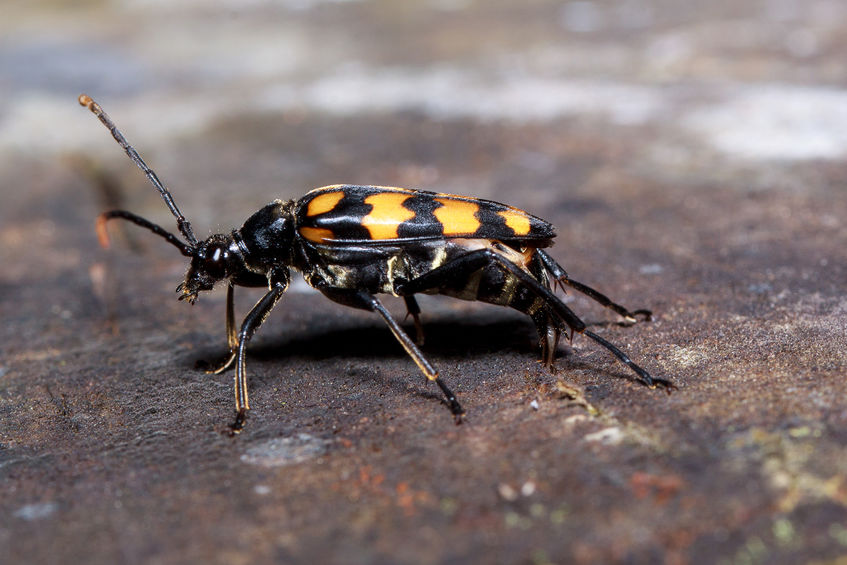
The Beinecke Rare Book & Manuscript Library located on Yale University’s campus in New Haven, Connecticut contains one of the largest and most valuable collections of historically notable books and manuscripts in the world. The building’s central tower can hold at least 180,000 books and over one million can be stored in its underground book stacks. Scholars from all over the world visit Yale’s campus in order to access these books. The library even contains the first edition of the Gutenberg Bible, and many other first editions of classic texts. Unfortunately, this library and many other museums around the world have become infested with a particularly damaging group of insects that few people have heard of. These insects are known as deathwatch beetles and they are capable of boring into wood. In fact, much like termites, deathwatch beetles are one of the very few insect species that can digest wood and other cellulose-containing materials. However, it is this beetle’s habit of consuming the paper from historically notable books that makes this species a notable and economically significant insect pest.
The library at Yale became infested with deathwatch beetles in 1977, but luckily, they were eradicated before they could cause costly damages to the library’s precious collection of books and manuscripts. Not only were the beetles successfully eradicated from the library, but library officials pioneered a method of protecting the books from insect pests. The pest control method that had been developed to combat the beetles at the library eventually became the standard method for controlling insect pests within museums and libraries all over the world. This method entails the freezing of all books and manuscripts at a temperature of -33 degrees fahrenheit for three day cycles. Although this method has proven effective at preventing insect infestations, a library housing historically significant books in the United Kingdom became infested with deathwatch beetles five years ago, and despite eradication efforts, the beetles remain within the library to this day.
Have you ever noticed damage to your books that may have been caused by insects?