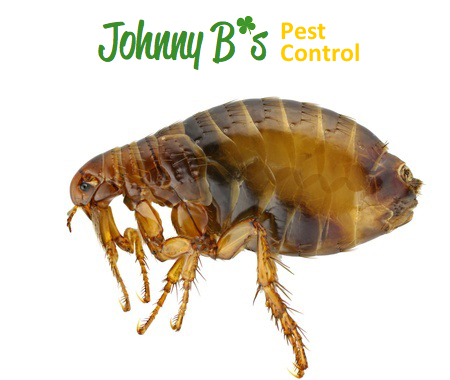
Fleas are bloodsucking pests that dwell in grassy areas, and they are similar to ticks, except ticks are technically arachnids, while fleas are insects. Several flea species can be found in Massachusetts, and each species’ common name indicates their preferred host. For example, dog fleas prefer to feed on the blood of dogs, rodent fleas feed on rodent blood and cat fleas prefer to feed on cat blood. However, all fleas will feed on multiple animals, including humans, and cat fleas are the most apt to feed on animals that are not their preferred hosts, as cat fleas are in the habit of hopping on the skin of whichever host is available. Homes become infested with fleas after dogs, cats, rodents or humans transport them indoors from their usual grassy habitat.
Fleas can go months without feeding, so after they are transported indoors, they can wait long periods before jumping onto another host, but female fleas must ingest a blood-meal in order to lay eggs. Female fleas lay around 100 white eggs that hatch larvae in between 3 and 15 days, and larvae develop to maturity between 15 and 30 days. Eggs are usually laid on the host where they normally drop onto beds or flooring where larvae feed on dust, dried blood and organic matter, but luckily, larvae do not suck blood.
Fleas are great survivors, but indoor conditions can dramatically influence the speed at which eggs and larvae develop. Flea eggs and larvae develop most rapidly in adequately moist indoor conditions where the temperature is 80 to 90 degrees, and where organic matter is readily available as a food source. In ideal conditions, fleas can complete their life cycle in between 18 and 21 days, but in disagreeable conditions, it can take as long as 6 to 8 months for an egg to become an adult.
Ideal conditions will see adult fleas live for several months, which is why it is not uncommon for homes in the northeast to be treated for flea infestations during the winter months. In the northern states, fleas will not hitch a ride into a home during the winter season, but fleas are year round pests in southern states. Eliminating flea infestations is not easy, and pest control professionals usually have to apply multiple insecticide treatments to be sure that all flea pests have been exterminated.
Have you ever experienced a flea infestation that required professional treatment?