The house mouse is a common household pest belonging to the rodent family. It is small in size, usually about 7-8 inches long, tail included, and coloration ranging from light brown to gray.
Diet and behavior
House mice are mostly nocturnal, because they are safer in low visibility environments. However, you may see house mice out during the day as well, which is an indication that there is a large infestation in the home. House mice are very acrobatic, and able to climb, jump and run towards their objectives. In terms of diet, mice are omnivores eating everything from seeds to fruits, plant roots, berries, insects and even meat. They are also known to store food inside their burrows.
Reproduction
When inside the home, house mice will reproduce throughout the year, with one female giving birth as many as eight times a year to an average of six pups each birthing. A female will be able to start reproducing at six weeks old, and if the conditions are right, it can live up to two years in the home.
Signs of a house mouse infestation
There are a few signs to keep an eye out for if you suspect that you have a mouse infestation in the home. The first is the presence of droppings. These droppings will be small, black and resemble tiny grains of rice, and they will be most present along where the mice travel and feed. You may then notice some gnaw marks inside the home. These marks are caused by rodents in areas where they are most active and along the paths they use to travel in the home. Other common signs of an infestation include a distinct odor of ammonia, gnawing noises at night, and the presence of a live mouse in the home.
Controlling a house mouse infestation
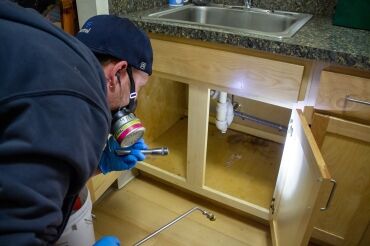
In order to control a house mouse infestation effectively you will need the help of a pro. Removing a mouse infestation can be difficult with DIY methods, and if the infestation is not removed completely, the mice will simply repopulate. A pro will use traps and poisons to completely wipe out a mouse population as quickly as possible, so you do not have to worry about the diseases that these pests can spread. Contact us today if you have a mouse infestation that needs to be removed and we will help you get rid of it.