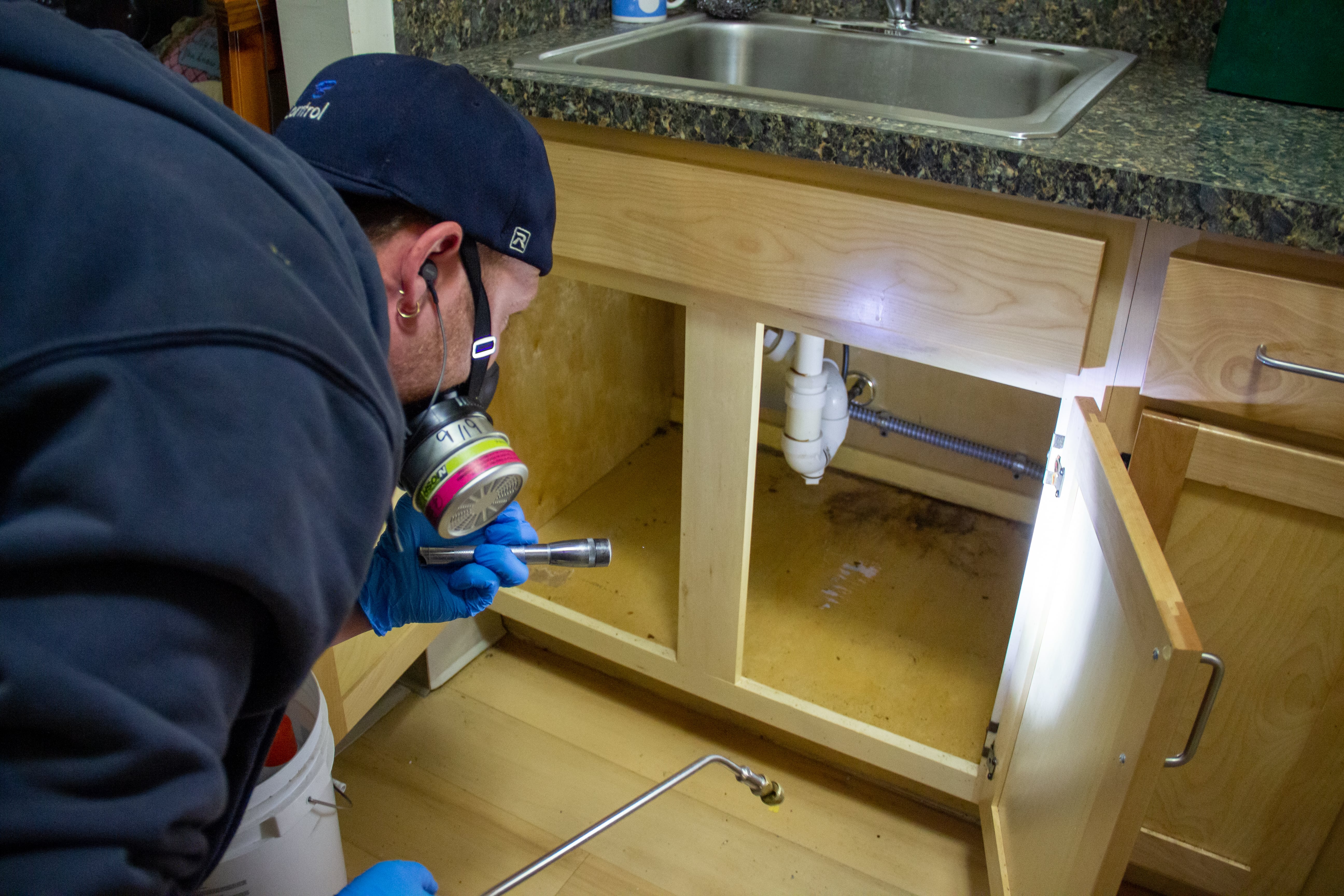
Due to the cryptic nesting habits of ant pests, the average homeowner does not possess the knowledge, tools, training, experience or licensing to adequately remedy most ant infestations. Unfortunately, the ant pest species that are most difficult to eliminate from infested homes are also the most commonly managed ant pests in the country. These ants are commonly known as “carpenter ants,” and their habit of excavating nests within moist structural wood members make them the most economically costly ant pests worldwide.
Nearly 1000 carpenter ant species have been documented, 50 of which can be found in the US, but only around ⅓ of these native species are known structural pests. The black carpenter ant (Camponotus pennsylvanicus) is the most commonly managed carpenter ant pest, and they can be found throughout the eastern US where they are most prevalent in forested regions. The black carpenter ant, and most other carpenter ant species, are notable for being the largest ants in North America, as workers range from ¼ to more than ½ an inch in body length. Another little known, but very common carpenter ant pest in the region, the smaller carpenter ant (C. nearcticus), is relatively small at ⅕ to ⅓ of an inch in length.
While carpenter ants are the most destructive ant pests in the US, the structural damages they inflict very rarely compromise the structural integrity of homes and buildings. Carpenter ant colonies are usually established within dead portions of trees, tree hollows, and within wood debris in wooded areas. After colonies mature for a period of two or more years, foraging workers establish additional satellite nests within a 200 meter radius of the parent nest. Naturally, homes located near numerous trees are most susceptible to carpenter ant infestations. Amazingly, a recent study documented carpenter ant infestations within 75 percent of all shade trees in one urban area of the northeast.
Have you ever found ants entering your home from the outside?